
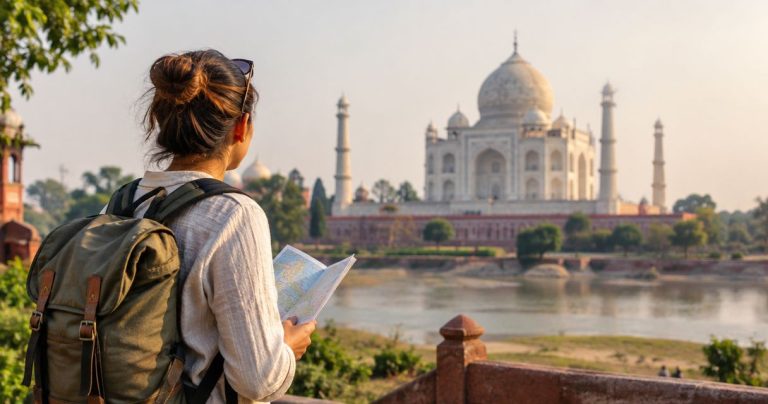
Travel to India from the UK in 2026 requires a destination-specific safety check, not a blanket yes or no. Check the Foreign, Commonwealth & Development Office (FCDO) advice for your exact route before booking, then confirm your insurance covers that itinerary; an operating flight does not establish that a destination is safe or insured.
In-short:
- Is it safe to travel to India from the UK 2026? Check FCDO advice for every destination and transit point.
- Mann Travel Uk helps UK travellers compare flights to India; government advice and insurance determine separate travel decisions.
- Assess entry documents, health needs, airport transfers and onward journeys before committing to an itinerary.
- Recheck official travel advice before departure, including when you are visiting familiar places or staying with family.
Why this matters
A flight search answers how you can reach India. It does not answer whether your particular journey is appropriate given official advice, your health and your insurance policy. These are separate decisions, and each needs checking.
For a family visit, wedding or business trip, start with the destination and work backwards through every connection. The guide to travel insurance for a trip to India from the UK explains the insurance questions to consider alongside your flight booking.
Is it safe to travel to India from the UK in 2026?
Make the decision for your itinerary, not for India as a single destination. Read the FCDO India travel advice, including regional risks, safety and security, entry requirements and health guidance. Check each place where you will stay or travel overland, rather than stopping at the arrival airport.
Use this sequence before you commit:
- Check official advice. Read the FCDO guidance for your destinations and any country where you change aircraft. Check advice maps and the wording of regional warnings.
- Check insurance. Give your insurer the full itinerary, including domestic flights, activities and existing medical conditions. Ask for clarification in writing where cover is unclear.
- Check documents. Confirm passport, visa or Overseas Citizen of India documentation requirements for each traveller. Do not apply another family member's nationality rules to your own booking.
- Check health. Review TravelHealthPro's India guidance and seek individual medical advice where needed. Your route, activities and medical history affect the preparation required.
- Check arrival plans. Arrange a verified transfer, save your accommodation details offline and tell someone when you expect to arrive.
For a 2026 departure, revisit these checks before leaving. A decision made when you booked is not a substitute for checking conditions close to travel.
What does FCDO advice mean for your decision?
Read the exact wording rather than treating every advisory as the same. FCDO advice distinguishes between advice against all travel and advice against all but essential travel. Those warnings are not interchangeable.
A wedding invitation or family commitment does not, by itself, resolve whether a journey falls within official guidance or your insurer's terms. Ask the insurer how the advice affects your particular trip before making non-refundable arrangements.
Do not treat the absence of a specific warning as a guarantee. Official advice supports your decision, but it cannot account for every street, activity or personal circumstance.
- Before booking: check the destination, transit points and planned excursions.
- Before departure: read updates and check your airline's operational notices separately.
- During the trip: follow local instructions and reassess plans if circumstances change.
Save access to official advice and subscribe to FCDO email updates for India. Keep emergency contacts available offline rather than relying entirely on mobile reception.
Why safety varies between India itineraries
Your itinerary changes the questions you need to ask. Use these factors to assess the journey rather than relying on a general description of a city as safe or unsafe:
- Location: official warnings can distinguish between regions. Check side trips and overland routes as carefully as your main destination.
- Timing: weather, public gatherings and transport disruption affect practical travel arrangements. Check destination-specific forecasts and local instructions.
- Transport: a daytime airport collection presents different planning needs from an unfamiliar late-night road transfer.
- Health: pregnancy, existing conditions, medication and planned activities require individual assessment.
- Travel arrangements: travelling alone, with children or with someone needing assistance changes the support you should arrange.
- Insurance: cover depends on policy wording, declared circumstances and the activities you undertake.
For 2026 travel, write down the actual route before assessing these factors. “London to Delhi” does not describe a journey that continues by road to another state or includes a separate domestic flight.
Are non-stop flights safer than connecting flights?
A non-stop itinerary removes the need to change aircraft, but fewer connections are not evidence that an airline or route is safer. Compare the practical journey without turning convenience into an unsupported safety ranking.
| Itinerary | Best for | Practical advantage | Limitation to check |
|---|---|---|---|
| Non-stop flight | Travellers prioritising fewer airport changes | No intermediate airport connection | Arrival time and onward transport still need planning |
| Connecting flight on one ticket | Travellers considering routes through an intermediate airport | The booked itinerary includes the connection | Check transit documents, baggage arrangements and disruption terms |
| Separate-ticket connection | Travellers deliberately building their own itinerary | Each flight can be selected independently | Do not assume the onward booking is protected after a delay |
Ask whether the booking is issued as a through-ticket or consists of separate tickets. Also confirm whether checked baggage is transferred, whether you must pass immigration and what happens if the first flight is delayed.
For a London, Manchester or Birmingham departure, compare the complete journey to your final address. An attractive arrival time at an Indian airport loses its practical value if it leaves you arranging an unfamiliar overnight transfer without support.
How should you prepare for arrival in India?
Arrange your first transfer before departure. Use a provider you have verified, confirm the pickup instructions and establish how you will identify the driver or meet your family.
Keep the accommodation address and a working contact number offline. Share your flight details with whoever is collecting you, and agree what to do if the aircraft is delayed or you cannot make a call.
- Airport pickup: confirm the meeting point and booking details before leaving the terminal.
- Road travel: use seat belts where fitted and choose transport with appropriate restraints for children.
- Documents: keep your passport secure and avoid handing it to an unverified intermediary.
- Money: retain a backup payment method separately from your main wallet.
- Communication: save important numbers and arrange a way to contact your host or accommodation.
Prepare 2 accessible copies of essential travel details: an offline digital copy and a paper copy stored separately. Include your itinerary, insurer's emergency assistance contact and accommodation information; protect sensitive personal information when storing or sharing it.
What health checks should you make before travelling?
NHS travel vaccination guidance recommends seeking advice at least 8 weeks before travel where possible. Check TravelHealthPro's India information and speak to a qualified clinician about your destinations, activities and medical history. If departure is closer, seek advice promptly rather than assuming it is too late.
Do not use a generic vaccine list as a personal prescription. Advice differs according to previous vaccinations, trip duration and the places you plan to visit, including whether malaria prevention is relevant to your route.
Pack prescription medicines in their original packaging and check the rules for taking them into India and through transit countries. Carry supporting prescription information, and discuss storage requirements with your pharmacist.
For a 2026 trip involving pregnancy, recent surgery or a significant medical condition, check both medical fitness to travel and airline requirements. An airline's permission to board is not a substitute for clinical advice or insurance confirmation.
Is India safe for solo women and family travellers?
Solo travellers and families need plans that match their circumstances, not a destination-wide reassurance. Read the relevant sections of FCDO advice, including guidance for women travelling abroad, and assess accommodation and transport before booking.
For solo travel, choose accommodation you can verify, establish how you will return after evening activities and share your plans with a trusted contact. If an arrangement feels wrong, move to a staffed public place and seek assistance rather than continuing out of politeness.
For families, check every traveller's documents independently. Discuss medication, allergies, accessibility and child restraints before departure, and confirm any airline requirements for children travelling with someone other than a parent or legal guardian.
Visiting relatives does not remove these checks. A familiar destination still requires current documents, appropriate insurance and an arrival plan that works if your flight time changes.
Where does a travel agency help with safety planning?
Mann Travel Uk is best suited to UK travellers who want help comparing flights to India. Route comparison is the agency's role; official security advice, medical suitability and insurance cover require their respective sources.
Mann Travel Uk's flight comparison service can support the booking decision, but it is not a substitute for the FCDO, a clinician or your insurer. Ask clear booking questions: which airports are involved, whether tickets are separate, what baggage arrangements apply and what the fare conditions permit.
Keep the responsibilities distinct. A booking confirmation establishes your travel arrangements; it does not certify the safety of every destination or activity on your itinerary.
What should you do if plans change before departure?
If official advice, flight operations or your health changes, pause before making replacement bookings. Establish what has changed, then contact the airline or booking provider and your insurer about the existing arrangements.
Keep written records of cancellation notices, advice received and expenses. Do not assume that deciding not to travel automatically creates a refund entitlement; ticket conditions, applicable passenger rights and insurance wording answer different questions.
For 2026 departures, keep a short pre-departure record of your checks. Record when you reviewed official advice, confirmed insurance and checked documents, then update the record if your route changes.
What should you do in an emergency in India?
India's national emergency response number is 112. Save it alongside your insurer's emergency assistance number and the British consular assistance details published on GOV.UK.
In an immediate emergency, seek local emergency assistance first. Contact your insurer promptly for medical assistance and follow its instructions where the situation allows.
British consular services and travel insurance have different roles. Read the FCDO's explanation of consular support before departure, and do not assume consular assistance pays medical bills or replaces insurance.
Frequently Asked Questions
Is it safe to travel to India from the UK in 2026?
Assess your exact itinerary against current FCDO advice rather than treating India as having one safety status. Confirm insurance, entry documents, health preparation and onward transport before booking.
Does an operating flight mean my destination is safe?
No. An operating flight confirms transport operations, not the safety of your complete itinerary or the validity of your insurance.
Can I travel against FCDO advice if I have insurance?
Do not assume your insurance covers travel against FCDO advice. Give your insurer the destination and advisory wording, and obtain written confirmation of how the policy applies.
How early should I ask about travel vaccinations for India?
At least 8 weeks before departure is the NHS recommendation for seeking travel vaccination advice where possible. If you leave sooner, seek advice promptly and explain your full itinerary.
What emergency number should I save for India?
112 is India’s national emergency response number. Also save your insurer’s emergency assistance contact and current British consular assistance details offline.
Can Mann Travel Uk confirm that my India trip is safe?
Mann Travel Uk helps compare flights to India, not certify destination safety. Use FCDO advice for official travel guidance, a clinician for personal medical advice and your insurer for cover confirmation.
Do I still need safety checks when staying with family?
Yes. Staying with family does not replace checking official advice, entry documents, insurance or medical preparation, and your airport transfer still needs arranging.
One last thing
Check the journey after the flight, not just the flight itself. Put your Indian arrival airport, onward transport, final address and emergency contacts on the same saved itinerary. That makes gaps visible before you leave the UK, when you still have time to fix them.

